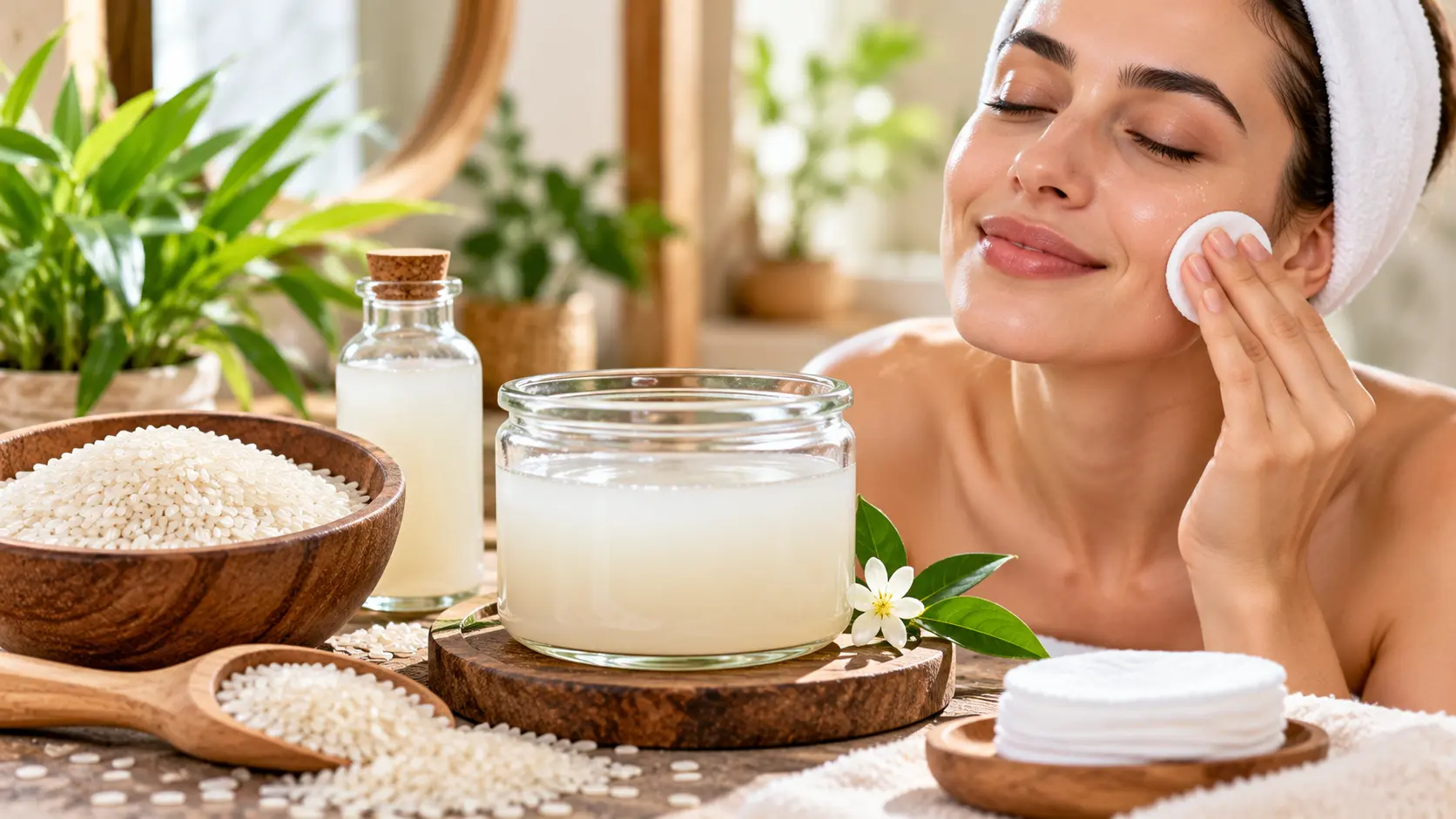
Rice water for skin has become a popular topic in natural skincare, especially among people interested in simple beauty routines. This cloudy liquid, created by soaking or cooking rice in water, has a long history in traditional Asian beauty practices. Many people believe it can help improve skin hydration, promote a smoother appearance, and support a healthy-looking complexion.
One reason rice water attracts attention is its simple preparation and the naturally occurring compounds found in rice. It contains varying amounts of starch and other water-soluble substances, depending on how it is prepared. However, many popular claims about rice water are based on traditional use rather than strong scientific evidence.
Understanding the potential benefits and limitations of rice water can help you decide whether it belongs in your skincare routine. This guide explains what rice water is, how it may affect the skin, different preparation methods, and important precautions for safe use.
What Is Rice Water for Skin?
Rice water is the cloudy liquid produced when rice is soaked, rinsed, or cooked in water. During preparation, some starch and other water-soluble components move from the rice into the surrounding liquid. The resulting mixture has traditionally been used in different beauty practices, including facial rinses and hair care routines.
The composition of rice water depends on the rice variety, water quality, temperature, and preparation method. White rice and brown rice can release different amounts of compounds into water. Rice water should not be confused with concentrated rice extracts found in commercial skincare products, which undergo different processing and formulation methods.
Many people describe rice water as a natural facial toner or refreshing rinse. However, homemade rice water is not a standardized cosmetic product, and its composition can vary between batches. Understanding this difference is important because the effectiveness and safety of professionally formulated products cannot automatically be attributed to homemade preparations.
Why Is Rice Water Popular in Skincare?
Rice has been associated with traditional beauty practices in several Asian cultures for generations. Historical routines sometimes included using rice-derived liquids to wash the skin or hair. These practices have gained renewed attention through social media, natural beauty discussions, and growing interest in Asian skincare traditions.
Modern interest in rice water is also influenced by skincare products containing rice bran, rice extracts, and fermented rice ingredients. These formulations are often marketed for hydration, skin conditioning, and improving the appearance of the complexion. However, products containing tested rice-derived ingredients may behave differently from simple homemade rice water.
Another reason for its popularity is the perception that simple ingredients offer gentle skincare alternatives. Some people prefer uncomplicated routines with fewer products. Nevertheless, natural ingredients are not automatically safer or more effective, and individual skin reactions should always be considered before introducing something new.
Potential Benefits of Rice Water for Skin
Rice water may provide temporary skin-conditioning effects because it contains starch and small amounts of other rice-derived substances. Some people report that their skin feels softer after using it as a rinse. However, these personal experiences do not establish that rice water consistently improves skin health across different individuals.
Laboratory research has identified antioxidant activity in certain rice-water preparations. Antioxidants can help protect cells from oxidative damage, making them interesting ingredients for cosmetic research. However, laboratory findings do not necessarily mean that homemade rice water will produce noticeable anti-aging or protective effects when applied to the face.
Research involving rice-derived starch preparations has also explored potential benefits for damaged skin barriers. These findings are promising but should not be interpreted as proof that ordinary homemade rice water treats skin conditions. Larger, carefully designed human studies are needed to establish specific benefits, effective formulations, and appropriate usage recommendations.
Can Rice Water Help Hydrate the Skin?
Hydration is essential for maintaining comfortable skin and supporting its natural protective barrier. Rice water contains moisture and dissolved substances that may temporarily condition the skin’s surface. However, applying water alone does not necessarily produce lasting hydration because moisture can evaporate after the liquid dries.
Commercial moisturizers typically contain ingredients that attract water, soften the skin, or reduce moisture loss. These formulations are designed to support hydration more reliably than an ordinary water-based rinse. Rice water does not provide the same balanced combination of moisturizing ingredients found in many tested skincare products.
People interested in maintaining hydrated skin should prioritize gentle cleansing and an appropriate moisturizer. Rice-derived cosmetic products may provide additional conditioning benefits when formulated effectively. However, homemade rice water should be considered an optional skincare experiment rather than a replacement for established moisturizing practices.
Does Rice Water Brighten the Skin?
Rice water is frequently associated with claims about improving skin brightness and creating a more even-looking complexion. These claims are especially common in social media beauty discussions. However, there is limited high-quality clinical evidence showing that homemade rice water reliably changes skin pigmentation or reduces dark spots.
Some rice-derived compounds have attracted scientific interest because of their antioxidant properties. These characteristics may support the development of cosmetic products designed to improve skin appearance. Nevertheless, the presence of potentially useful compounds does not establish that soaking rice produces a clinically effective brightening treatment.
Uneven pigmentation can have several causes, including sun exposure, inflammation, and individual skin characteristics. Proper sun protection and suitable dermatologist-recommended products are more established approaches to managing pigmentation concerns. Rice water should not be presented as a proven treatment for hyperpigmentation, melasma, or other pigment-related conditions.
Rice Water for Oily and Acne-Prone Skin
People with oily skin sometimes explore rice water because it may leave a temporary fresh or less greasy feeling. Its starch content can influence how the skin surface feels after application. However, this temporary sensation does not demonstrate that rice water controls sebum production or prevents oily skin.
There is also insufficient scientific evidence that homemade rice water can effectively treat acne. Acne develops through several processes involving clogged follicles, oil production, inflammation, and skin microorganisms. A simple rice-water rinse has not been established as a reliable treatment for these underlying factors.
Homemade mixtures may also become contaminated during preparation or storage, potentially worsening skin irritation or breakouts. People with acne-prone skin should be particularly cautious about applying unpreserved liquids to their faces. Gentle cleansing and evidence-based acne treatments provide more dependable options for managing recurring blemishes.
Can Rice Water Soothe Sensitive Skin?
Rice-derived ingredients are sometimes included in skincare products intended for dry or sensitive skin. Certain studies involving rice starch suggest potential benefits for supporting the skin barrier. However, these findings involve particular preparations and should not be treated as direct evidence for every homemade rice-water mixture.
Sensitive skin can react to many substances, including ingredients generally considered gentle. A rice-water preparation may cause itching, redness, or discomfort in some individuals. People with eczema, rosacea, allergies, or an already damaged skin barrier should seek professional guidance before experimenting with homemade skincare treatments.
For irritated skin, simple fragrance-free moisturizers and gentle cleansers are usually more predictable options. Rice-derived commercial products may be considered when their ingredients and intended uses are clearly identified. Any product that produces burning, itching, or persistent discomfort should be discontinued rather than repeatedly applied.
How to Make Rice Water for Skin
Rice water can be prepared through soaking or cooking, although homemade preparations are not sterile and have no standardized cosmetic concentration. If you choose to try a freshly prepared rinse, use clean drinking-quality water, clean utensils, and plain rice. Avoid rice containing added seasonings, fragrances, or other unnecessary ingredients.
For a simple soaking method, rinse a small amount of rice and place it in a clean bowl with fresh water. Allow it to soak briefly, then separate the liquid from the rice using a clean container. This creates a cloudy preparation containing some released starch, although the concentration and composition will vary.
Another traditional method involves collecting some of the water used to cook plain rice. Cooking may produce a thicker liquid because more starch is released into the water. Any cooked preparation must cool completely before skin contact, and neither method guarantees that the resulting liquid is microbiologically safe.
How to Use Rice Water on Your Face
Before applying any unfamiliar skincare preparation to your face, consider testing it on a small area of healthy skin first. This can help identify irritation, although a successful test does not guarantee that later reactions will not occur. People with damaged or inflamed skin should avoid homemade preparations unless advised otherwise by a clinician.
If you choose to try freshly prepared rice water after testing, use it only as a brief rinse on intact skin. Keep it away from your eyes, mouth, and irritated areas. Gently rinse it off with clean water rather than assuming that leaving a homemade mixture on the skin will provide additional benefits.
Afterward, use your usual gentle moisturizer if needed. Watch for redness, itching, stinging, or breakouts, and stop using the mixture if any of these symptoms develop. Rice water is optional and should not replace sunscreen, prescribed treatments, or skincare products recommended for specific skin conditions.
Can You Use Rice Water Every Day?
There is no established clinical recommendation supporting daily application of homemade rice water to the face. Its safety and effects depend on preparation, skin condition, storage, and individual sensitivity. More frequent use does not necessarily produce better results, especially when the potential benefits have not been clearly demonstrated.
Daily exposure to unfamiliar homemade mixtures may increase the opportunity for irritation or contamination-related problems. People with sensitive or acne-prone skin may notice discomfort even when the preparation appears harmless. Applying a substance repeatedly without knowing its composition can also make it difficult to identify the cause of unexpected reactions.
A consistent skincare routine does not need to include rice water to support healthy skin. Gentle cleansing, appropriate moisturizing, and sun protection have clearer roles in everyday care. If you are interested in rice-derived ingredients, a properly preserved and tested commercial formulation may offer more predictable quality.
Is Fermented Rice Water Better for Skin?
Fermented rice water is produced when microorganisms alter compounds within a rice-water mixture over time. Fermentation changes the liquid’s chemical composition and may produce different substances depending on the organisms and conditions involved. This variation makes homemade fermentation especially difficult to standardize for cosmetic use.
Some commercially manufactured skincare products contain fermented rice extracts that have undergone controlled processing and safety evaluation. These products should not be considered equivalent to rice water left to ferment in a household container. Their effectiveness also depends on the complete formulation rather than fermentation alone.
Allowing homemade rice water to ferment without appropriate controls can increase the risk of unwanted microbial growth. Changes in smell or appearance do not reliably indicate whether the liquid is safe for facial application. For this reason, deliberately fermenting rice water at home for skincare is not recommended.
How Long Can You Store Homemade Rice Water?
Homemade rice water usually contains no preservatives, making it vulnerable to microbial contamination. Its safety can change during storage, even when the liquid looks normal. Temperature, handling, container cleanliness, and preparation conditions all influence the likelihood of bacteria or other microorganisms growing.
The safest approach is to prepare only a small amount for immediate use and discard any leftovers. Refrigeration may slow microbial growth, but it does not sterilize the preparation or establish a guaranteed safe storage period. Keeping homemade rice water for several days is unnecessary and introduces additional uncertainty.
If a preparation develops an unusual smell, visible particles, discoloration, or other changes, it should be discarded immediately. However, harmful contamination may exist without obvious warning signs. Commercial skincare products generally provide a more reliable option when repeated use and longer storage are important.
Side Effects and Risks of Rice Water on Skin
Although rice water is often described as a gentle natural remedy, it can still cause unwanted skin reactions. Possible problems include irritation, itching, redness, and discomfort. These reactions may result from individual sensitivity, existing skin conditions, or contamination of a homemade preparation.
Applying unpreserved rice water to broken or irritated skin presents additional concerns because the skin’s protective barrier may already be compromised. People with eczema, active rashes, or other ongoing dermatological conditions should be cautious. Using homemade mixtures instead of appropriate medical treatment may also delay improvement.
If you develop a reaction, stop applying the preparation and gently rinse the affected area. Persistent symptoms should be assessed by a qualified healthcare professional. The potential benefits of an optional natural skincare ingredient should never outweigh the importance of protecting the skin from avoidable irritation or infection.
Rice Water vs Commercial Rice-Based Skincare Products
Homemade rice water and commercial rice-based skincare products differ significantly in formulation and quality control. Homemade preparations contain variable amounts of dissolved rice components and usually lack preservation systems. Commercial products may contain standardized extracts alongside other ingredients designed to improve stability, texture, and skin compatibility.
Rice-derived ingredients can appear in cleansers, moisturizers, serums, and other cosmetic products. Their functions vary depending on whether the formulation uses rice starch, rice bran oil, fermented extracts, or other components. Each ingredient has different characteristics, so the phrase rice skincare does not describe one universal treatment.
When selecting commercial products, review the complete ingredient list rather than relying only on the presence of rice extracts. Fragrance, preservatives, moisturizing agents, and other ingredients can affect suitability for different skin types. Products developed for sensitive skin may offer a more predictable option than frequently preparing unpreserved homemade mixtures.
Conclusion
Rice water for skin remains a popular beauty ingredient because of its traditional use, simple composition, and association with natural skincare practices. Preliminary research suggests that certain rice-derived preparations may offer skin-conditioning or antioxidant properties. However, strong clinical evidence supporting the major benefits claimed for homemade rice water remains limited.
Understanding how to use rice water safely is just as important as exploring its possible benefits. Homemade preparations can cause irritation and may become contaminated without proper handling. Patch testing, avoiding damaged skin, and discarding leftover mixtures are sensible precautions for anyone considering occasional use.
Healthy skincare does not require complicated routines or unproven ingredients. Gentle cleansing, suitable moisturizers, and daily sun protection provide a stronger foundation for maintaining comfortable skin. Rice-derived cosmetic ingredients may have a place in skincare, but their value depends on product formulation, reliable evidence, and individual skin tolerance.
Frequently Asked Questions
What are the main benefits of rice water for skin?
Rice water may provide temporary skin-conditioning effects, and certain rice-derived formulations have shown antioxidant or skin barrier benefits in preliminary research. However, evidence supporting major improvements from homemade rice water remains limited.
Can rice water make your face glow?
Some people report that rice water leaves their skin feeling refreshed or smoother. However, there is insufficient evidence that homemade rice water consistently produces a brighter complexion or meaningful long-term changes in skin appearance.
Can I leave rice water on my face overnight?
Leaving homemade rice water on your face overnight is not recommended because unpreserved mixtures can become contaminated or irritate the skin. A properly formulated moisturizer is a more reliable choice for overnight hydration.
Is rice water good for pimples and acne?
Rice water has not been proven to treat acne or prevent pimples. Homemade preparations may also introduce contamination or irritation, so evidence-based acne products and professional guidance are preferable for recurring breakouts.
How often should I use rice water on my face?
There is no scientifically established frequency for applying homemade rice water. If you choose to try it, prioritize patch testing and occasional use of a fresh preparation, stopping immediately if irritation develops.