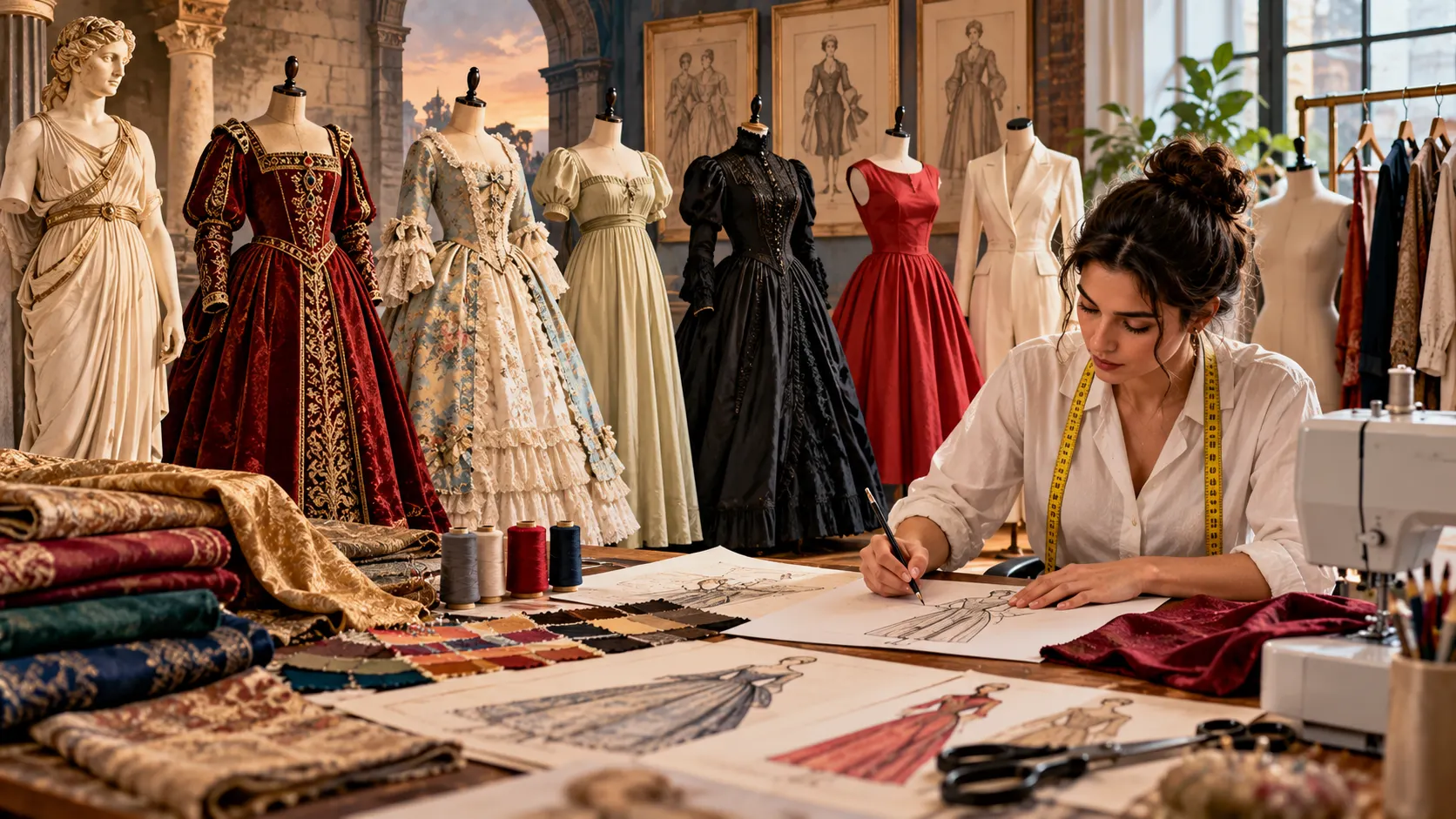
Fashion design and garment making have played an important role in human civilization for thousands of years. From early clothing made with animal skins and natural fibers to modern designer collections and advanced textile technology, fashion has continuously evolved. Clothing does more than protect the human body from changing weather conditions. It also reflects cultural traditions, social identities, artistic expression, and technological progress.
The history of fashion design is closely connected to the development of textile production, sewing techniques, trade, and craftsmanship. Ancient civilizations introduced weaving methods and decorative clothing, while medieval artisans developed specialized garment-making skills. The Industrial Revolution transformed clothing production through machinery and factory systems. Later, haute couture and ready-to-wear fashion changed how people designed, purchased, and experienced clothing.
This guide explores the history of fashion design and garment making from ancient times to the modern fashion industry. You will discover important historical periods, traditional sewing techniques, influential designers, and technological innovations. Understanding this evolution provides valuable insights into how clothing became a major part of global culture, business, and creative expression.
What Is Fashion Design and Garment Making?
Fashion design is the creative process of developing clothing, accessories, and wearable products that combine appearance, functionality, and cultural influences. Designers consider fabric, shape, color, construction, and the needs of the intended wearer. Fashion design can involve everyday clothing, specialized uniforms, traditional garments, and experimental collections. Its purpose extends beyond decoration to practical and social functions.
Garment making focuses on transforming textiles and other suitable materials into finished clothing. This process may involve measuring, pattern making, cutting, sewing, fitting, and finishing. Skilled garment makers use different construction techniques depending on the design and material. Their work helps turn an artistic concept into a functional product.
Although fashion design and garment making are closely related, they involve different areas of expertise. Designers may concentrate on creative development, while pattern makers and sewing specialists focus on construction. In smaller businesses, one person may perform several roles. Both disciplines are essential to understanding the history of clothing production.
The Origins of Clothing in Prehistoric Times
The history of garment making began long before recorded civilization. Early humans used available natural materials to protect themselves from weather and environmental conditions. Animal hides, plant fibers, and other resources likely played important roles in early clothing. Archaeological evidence provides clues about ancient garment construction, although many early materials have not survived.
The development of tools made clothing production more practical and sophisticated. Bone needles and other sewing implements allowed people to join pieces of material together. These innovations helped create more fitted garments suited to different climates. Archaeological discoveries indicate that sewing technologies existed during prehistoric periods, long before organized textile industries emerged.
Early clothing also developed social and cultural significance over time. Materials, decorative objects, and garment arrangements may have communicated information about communities and identities. However, interpretations of prehistoric fashion remain limited because surviving evidence is incomplete. These early innovations established the foundations for later textile production and clothing design.
Fashion and Garment Making in Ancient Egypt
Ancient Egypt developed sophisticated clothing traditions influenced by climate, social customs, and textile production. Linen was an important material because it was lightweight and suitable for the region’s warm conditions. Egyptian clothing often featured draped or wrapped garments made from woven fabric. The quality and decoration of clothing varied according to period and social circumstances.
Textile production required considerable skill, including preparing flax fibers, spinning yarn, and weaving cloth. Archaeological discoveries have revealed examples of ancient fabrics and garments. Clothing could include pleated designs, decorative elements, and carefully arranged fabric. Jewelry and accessories also contributed to personal presentation and cultural expression.
Egyptian garment-making traditions changed over thousands of years rather than following one fixed style. Social position, occupation, ceremony, and historical period influenced clothing choices. Surviving textiles provide valuable evidence of ancient craftsmanship. The civilization’s contributions demonstrate how textile production became an important economic and cultural activity.
Clothing Traditions in Ancient Greece and Rome
Ancient Greek clothing commonly relied on rectangular pieces of woven fabric arranged through draping, folding, and fastening. Garments such as the chiton and himation created different silhouettes without requiring complex tailoring. Materials and styles varied according to period, location, and social context. Clothing also reflected practical needs and cultural traditions.
Ancient Roman clothing developed its own distinctive forms while drawing on earlier Mediterranean influences. The tunic was widely worn, while the toga became associated with specific forms of Roman civic identity. Other garments, including cloaks and wrapped clothing, served different purposes. Textile quality and decorative features could communicate wealth or social position.
Greek and Roman clothing traditions influenced later artistic and fashion movements, particularly styles inspired by classical drapery. Their garments also demonstrate that sophisticated fashion does not always depend on complicated cutting patterns. Fabric arrangement, proportion, and craftsmanship can create distinctive designs. These historical examples continue to inspire fashion education and costume research.
Early Textile Traditions in Asia
Asian civilizations contributed significantly to the development of textiles, dyeing, embroidery, and garment construction. China became especially important in the history of silk production, with silk textiles developing over several millennia. Different Chinese dynasties introduced changing clothing styles and decorative traditions. Silk became a valuable material in regional and long-distance trade.
South Asia also developed rich textile traditions involving cotton, silk, weaving, printing, and decorative stitching. Historical garments and textiles varied considerably across regions and communities. Indian cotton fabrics became important commodities in international trade. Traditional methods of textile production contributed to the development of complex craft industries.
Other parts of Asia developed distinctive garment-making traditions, including Japanese kimono construction and Southeast Asian weaving techniques. These practices reflect diverse histories rather than one unified Asian fashion style. Textile knowledge often passed through generations of skilled craftspeople. Many traditional methods continue influencing contemporary clothing design and cultural dress.
Medieval Fashion and the Rise of Tailoring
During the medieval period, clothing production in Europe became increasingly associated with specialized crafts and urban workshops. Tailors, weavers, dyers, and other artisans contributed to the production of garments. Clothing styles varied greatly across different centuries and regions. Social position, available materials, and local traditions influenced how people dressed.
Tailoring techniques gradually developed to create garments that followed the body’s shape more closely. More elaborate cutting and fitting methods became important for certain forms of dress. Skilled craftspeople learned how to manipulate fabric through seams, shaping, and garment construction. These techniques helped expand the possibilities of clothing design.
Medieval clothing also reflected religious customs, occupations, and social regulations. Wealthier individuals could purchase expensive fabrics and decorative elements, while others relied on simpler materials. Clothing production often depended on manual labor and local textile networks. The period contributed important foundations for later professional tailoring traditions.
Renaissance Fashion and Artistic Expression
The Renaissance brought important developments in European clothing, textile production, and decorative craftsmanship. Fashion became closely connected with court culture, trade, and artistic expression. Wealthy patrons commissioned garments using luxurious fabrics and elaborate decoration. Clothing often communicated status, regional identity, and participation in fashionable cultural circles.
Renaissance garments could feature structured shapes, fitted bodices, decorative sleeves, and intricate surface details. Tailors developed increasingly sophisticated construction methods to achieve desired silhouettes. Expensive textiles such as silk, velvet, and brocade played important roles in elite clothing. However, everyday garments remained simpler for much of the population.
Fashion styles differed between Italian cities, French courts, England, and other European regions. Changes spread through trade, travel, portraits, and cultural connections. Dress became an important subject in visual art and historical documentation. The Renaissance demonstrates how clothing design developed alongside broader artistic and economic transformations.
Fashion Design During the 17th and 18th Centuries
European fashion during the seventeenth and eighteenth centuries was strongly influenced by royal courts, social customs, and expanding textile commerce. Elaborate clothing became associated with aristocratic environments, particularly in France. Garments featured decorative fabrics, embroidery, lace, and carefully constructed silhouettes. Fashion preferences changed across decades and geographical regions.
Specialized dressmakers, tailors, embroiderers, and textile workers contributed to increasingly complex clothing production. Techniques used to create structured garments required considerable craftsmanship. Different occupations often specialized in particular clothing components or construction methods. These professional divisions helped establish systems that influenced later fashion businesses.
The eighteenth century also witnessed growing circulation of fashion information through illustrations, publications, and commercial networks. People could learn about fashionable styles beyond their immediate communities. However, access to expensive clothing remained unequal. Developments during this period contributed to the emergence of fashion as an organized commercial industry.
The Industrial Revolution and Garment Production
The Industrial Revolution transformed textile manufacturing and clothing production during the eighteenth and nineteenth centuries. Mechanized spinning and weaving technologies increased the quantity of fabric that factories could produce. These developments changed the organization of labor and international textile trade. Industrial methods gradually reduced dependence on exclusively hand-produced cloth.
Factory systems introduced new production arrangements and increased the availability of certain textiles. However, working conditions were often difficult, and industrialization involved serious social consequences for many workers. The transition also differed between countries and industries. Traditional handcraft production continued alongside mechanized methods rather than disappearing immediately.
More affordable textiles eventually expanded clothing choices for larger sections of the population. Industrial developments also supported the growth of standardized garment manufacturing. These changes laid the groundwork for modern ready-to-wear clothing. The Industrial Revolution remains one of the most important turning points in the history of garment making.
The Invention of the Sewing Machine
The sewing machine was a major technological innovation that changed how garments were manufactured. During the nineteenth century, several inventors contributed to the development of practical mechanical sewing systems. Important developments included mechanisms for producing reliable lockstitches. Improvements in machine design gradually made mechanical sewing more useful for commercial production.
Inventors and manufacturers such as Elias Howe, Isaac Singer, and others played important roles in the sewing machine’s development and commercialization. Their contributions were part of a longer history involving multiple earlier experiments and inventions. Sewing machines increased the speed of many stitching operations. However, skilled operators remained essential for producing well-constructed clothing.
As sewing machines became more widely available, they influenced both factories and household garment making. Home sewing offered opportunities for clothing repairs and personal dressmaking. Industrial machines supported larger manufacturing operations. The technology fundamentally changed the relationship between clothing production, labor, and consumer markets.
The Birth of Haute Couture in the 19th Century
Haute couture emerged as an influential part of European fashion during the nineteenth century. Charles Frederick Worth is widely recognized as a pioneering figure in the development of modern couture houses in Paris. His approach emphasized designer identity, exclusive garments, and relationships with wealthy clients. These practices helped shape the modern fashion designer’s professional role.
Couture involved creating carefully fitted garments using skilled craftsmanship and high-quality materials. Clients could receive clothing designed or adapted to individual requirements. Specialized workshops employed people with expertise in cutting, sewing, embroidery, and finishing. This collaborative production process became an important feature of prestigious fashion houses.
The rise of haute couture also strengthened Paris’s position as an international fashion center. Designer collections and fashion presentations influenced clothing preferences beyond exclusive clients. However, couture remained accessible mainly to affluent customers. Its artistic and technical traditions continue influencing luxury fashion and garment construction today.
The Rise of Ready-to-Wear Fashion
Ready-to-wear clothing developed gradually as manufacturers began producing garments in standardized sizes. Instead of creating every piece for an individual customer, businesses manufactured clothing for broader consumer markets. This approach became increasingly practical with improvements in textile production and sewing technology. Standardized patterns and measurement systems helped make larger-scale production possible.
During the nineteenth century, ready-made clothing expanded in several industrializing countries. Military uniforms and certain work garments contributed to developments in standardized production. Over time, manufacturers introduced wider selections of everyday clothing. Department stores and other retail businesses helped distribute these products to growing consumer markets.
Ready-to-wear fashion became increasingly influential during the twentieth century. Designers began creating collections intended for commercial production rather than exclusively for individual clients. Clothing became more accessible across different income groups, although quality and affordability continued to vary. This production model remains central to the modern fashion industry.
Fashion Design in the Early 20th Century
The early twentieth century brought significant changes to clothing design and personal style. Traditional silhouettes gradually evolved as social expectations, artistic movements, and everyday activities changed. Designers experimented with lighter materials and different garment proportions. Fashion increasingly reflected modern lifestyles rather than only formal social traditions.
Designers such as Paul Poiret and Coco Chanel contributed to changing ideas about fashionable clothing. Their work explored different silhouettes, materials, and approaches to comfort and movement. However, fashion changes were influenced by many designers, craftspeople, consumers, and social developments. No single individual was responsible for the transformation of twentieth-century dress.
The growth of fashion magazines, photography, and international retail also influenced clothing trends. Consumers gained greater access to information about new styles and designers. Fashion became connected with entertainment, advertising, and popular culture. These developments helped establish the foundations of the contemporary fashion business.
Fashion Trends During the 1920s and 1930s
The 1920s introduced notable changes in clothing styles, particularly in parts of Europe and North America. Some fashionable dresses featured relatively straight silhouettes, decorative beadwork, and shorter hemlines than those common in earlier decades. Clothing increasingly reflected changing social activities and cultural attitudes. However, styles differed across communities and economic groups.
During the 1930s, fashion moved toward different proportions and construction techniques. Bias cutting became an influential method for creating garments that followed the movement of fabric. Designers such as Madeleine Vionnet were particularly associated with innovative draping and cutting methods. These techniques demonstrated how fabric properties could shape clothing design.
Economic conditions also affected fashion during this period. The Great Depression influenced clothing purchases, manufacturing decisions, and household sewing practices. Many people repaired or altered existing garments to extend their usefulness. Fashion continued evolving despite financial challenges, reflecting the relationship between design, society, and everyday needs.
How World War II Changed Garment Making
World War II significantly influenced clothing production in many countries. Material shortages and government restrictions affected the availability of textiles and decorative elements. Manufacturers adjusted garment designs to reduce unnecessary fabric consumption. Practical clothing became increasingly important in affected regions.
Wartime demands also changed patterns of employment and industrial production. Women participated in numerous occupations requiring functional work clothing, although their roles varied across countries. Uniforms and standardized garments became important areas of manufacturing. These developments reinforced the connection between clothing design and practical requirements.
After the war, fashion industries experienced further transformation as economies and consumer markets changed. Christian Dior’s 1947 collection, commonly associated with the New Look, introduced a highly influential silhouette. Its designs contrasted with many wartime clothing restrictions. The postwar period helped shape new directions in luxury fashion and consumer dress.
Fashion Design From the 1950s to the 1980s
Fashion changed rapidly during the second half of the twentieth century. The 1950s featured a variety of silhouettes, including structured tailoring and fuller skirts in some fashionable styles. By the 1960s, youth culture influenced clothing design more visibly. New trends reflected changing music, art, and social movements.
The 1970s introduced a wide range of fashion influences, including casual clothing, denim, and styles associated with different cultural communities. Designers experimented with materials, patterns, and silhouettes. During the 1980s, certain fashion trends emphasized bold colors, distinctive tailoring, and expressive accessories. However, everyday clothing remained diverse across regions and social groups.
Fashion also became increasingly connected with global entertainment and mass media. Television, magazines, and celebrity culture helped spread styles internationally. Designers and clothing manufacturers responded to changing consumer preferences. These decades demonstrated how fashion could communicate personal identity while remaining closely connected to business and cultural change.
The Growth of Global Fashion Manufacturing
The late twentieth century witnessed major changes in the organization of international garment manufacturing. Clothing brands increasingly developed supply chains involving textile producers, factories, and retailers in different countries. Improvements in transportation and communication supported this process. International production networks became central to many fashion businesses.
Countries across Asia and other regions developed substantial garment and textile industries. These industries created employment and contributed to national economies. However, working conditions, wages, and environmental impacts became important concerns. The growth of global manufacturing highlighted the relationship between inexpensive clothing and complex production systems.
Fashion companies also introduced different business models to respond to consumer demand. Some focused on luxury craftsmanship, while others emphasized affordable everyday clothing or rapid production. These approaches created distinct challenges for manufacturers and workers. Understanding global supply chains is essential for evaluating how contemporary garments reach consumers.
Modern Fashion Design and Digital Technology
Digital technology has transformed the way contemporary fashion designers develop and communicate ideas. Computer-aided design software allows professionals to create technical drawings, experiment with patterns, and organize garment specifications. Digital tools can also support collaboration between designers and manufacturing teams. These developments have improved certain aspects of the design process.
Three-dimensional garment visualization is another important innovation. Designers can use specialized software to examine virtual clothing shapes and estimate how materials may behave. Digital sampling may reduce the need for some physical prototypes. However, final garments still require appropriate material testing, fitting, and quality assessment.
Technology has also influenced retail, marketing, and consumer communication. Online stores and digital platforms allow fashion businesses to reach customers across different regions. Data analysis can help organizations understand purchasing patterns and production requirements. Despite these changes, creative judgment and garment-making expertise remain essential.
Sustainable Fashion and Ethical Garment Production
Sustainable fashion has become an important area of discussion within the modern clothing industry. Textile production and garment manufacturing can involve significant resource consumption, waste, and environmental impacts. Different materials and production methods create different challenges. These concerns have encouraged businesses and consumers to examine how clothing is made.
Some fashion companies explore recycled materials, more efficient production methods, and improved garment durability. Repair, reuse, and secondhand clothing can also help extend the useful life of garments. However, sustainability claims should be evaluated carefully. A product described as environmentally friendly is not automatically free from environmental impacts.
Ethical garment production also considers workplace conditions, wages, and responsible business practices. Transparent supply chains can help organizations identify and address potential problems. Meaningful improvements require cooperation between manufacturers, brands, policymakers, and other stakeholders. The history of garment making continues evolving as the industry responds to these challenges.
Traditional Garment-Making Skills in Modern Fashion
Traditional garment-making techniques remain important despite advances in industrial manufacturing. Hand embroidery, weaving, pattern drafting, and specialized tailoring are still practiced around the world. These skills support cultural traditions and distinctive clothing styles. Many techniques are passed down through families, workshops, and formal training programs.
Modern designers sometimes collaborate with skilled artisans to incorporate traditional craftsmanship into contemporary collections. Such collaborations can highlight regional textile knowledge and artistic heritage. However, responsible partnerships should recognize the contributions of craftspeople and respect cultural origins. Traditional techniques deserve recognition beyond their decorative appearance.
Learning garment-making skills can also help individuals understand clothing quality and construction. Basic sewing knowledge supports repairs, alterations, and creative projects. Advanced craftsmanship remains valuable in couture, costume production, and specialized tailoring. The continued relevance of these abilities demonstrates the lasting importance of hands-on expertise.
The Future of Fashion Design and Garment Making
The future of fashion design will likely involve continued development in technology, materials, and production systems. Digital design tools and automated processes may influence how garments are developed and manufactured. Researchers and businesses are also exploring new approaches to textile innovation. However, the adoption of emerging technologies will vary across the industry.
Consumer expectations may also influence future clothing production. Interest in durability, repairability, responsible sourcing, and transparent manufacturing could encourage changes in business practices. Different fashion markets will respond in different ways. Cost, accessibility, cultural preferences, and practical needs will continue shaping purchasing decisions.
Fashion design will remain connected to creativity and human expression regardless of technological developments. Designers will still need to understand materials, proportions, cultural influences, and garment construction. Skilled professionals will continue playing important roles throughout production. The industry’s future will build upon centuries of craftsmanship, innovation, and changing social needs.
Conclusion
The history of fashion design and garment making reflects thousands of years of human creativity and technological development. Early clothing traditions established practical methods for protecting the body and working with natural materials. Ancient civilizations expanded textile production, while medieval and Renaissance craftspeople developed specialized garment-making techniques. These contributions formed the foundations of modern clothing design.
The Industrial Revolution and sewing machine transformed garment manufacturing by making larger-scale production increasingly practical. Haute couture elevated the professional identity of fashion designers, while ready-to-wear clothing expanded commercial markets. During the twentieth century, changing cultural attitudes and global business networks influenced fashion trends. Each historical development contributed to the clothing industry we recognize today.
Modern fashion continues combining traditional craftsmanship with advanced technology and changing consumer expectations. Digital tools, international manufacturing, and sustainability concerns are influencing future developments. Understanding the history of clothing helps explain how fashion connects art, culture, labor, and commerce. From handmade garments to contemporary collections, fashion design remains an important form of human expression.
Frequently Asked Questions
When did fashion design first begin?
Fashion design developed gradually from early clothing traditions. Although humans made garments in prehistoric times, the modern professional fashion designer became more recognizable during the nineteenth century.
Who is considered the father of modern fashion design?
Charles Frederick Worth is commonly called the father of haute couture. He established an influential Parisian fashion house in 1858 and helped develop the modern designer-led couture business model.
How did the sewing machine change garment making?
The sewing machine made many stitching operations faster and supported the expansion of clothing manufacturing. It also influenced household sewing, garment production methods, and the growth of ready-to-wear clothing.
What is the difference between haute couture and ready-to-wear?
Haute couture involves specialized, made-to-order clothing created through skilled craftsmanship. Ready-to-wear garments are produced in standardized sizes for commercial sale, making them accessible to broader consumer markets.
How has technology changed modern fashion design?
Technology has introduced digital pattern making, three-dimensional garment visualization, advanced textile production, and online retail. These innovations support design development and manufacturing while traditional craftsmanship remains important.




[…] History of Fashion Design & Garment Making Guide […]