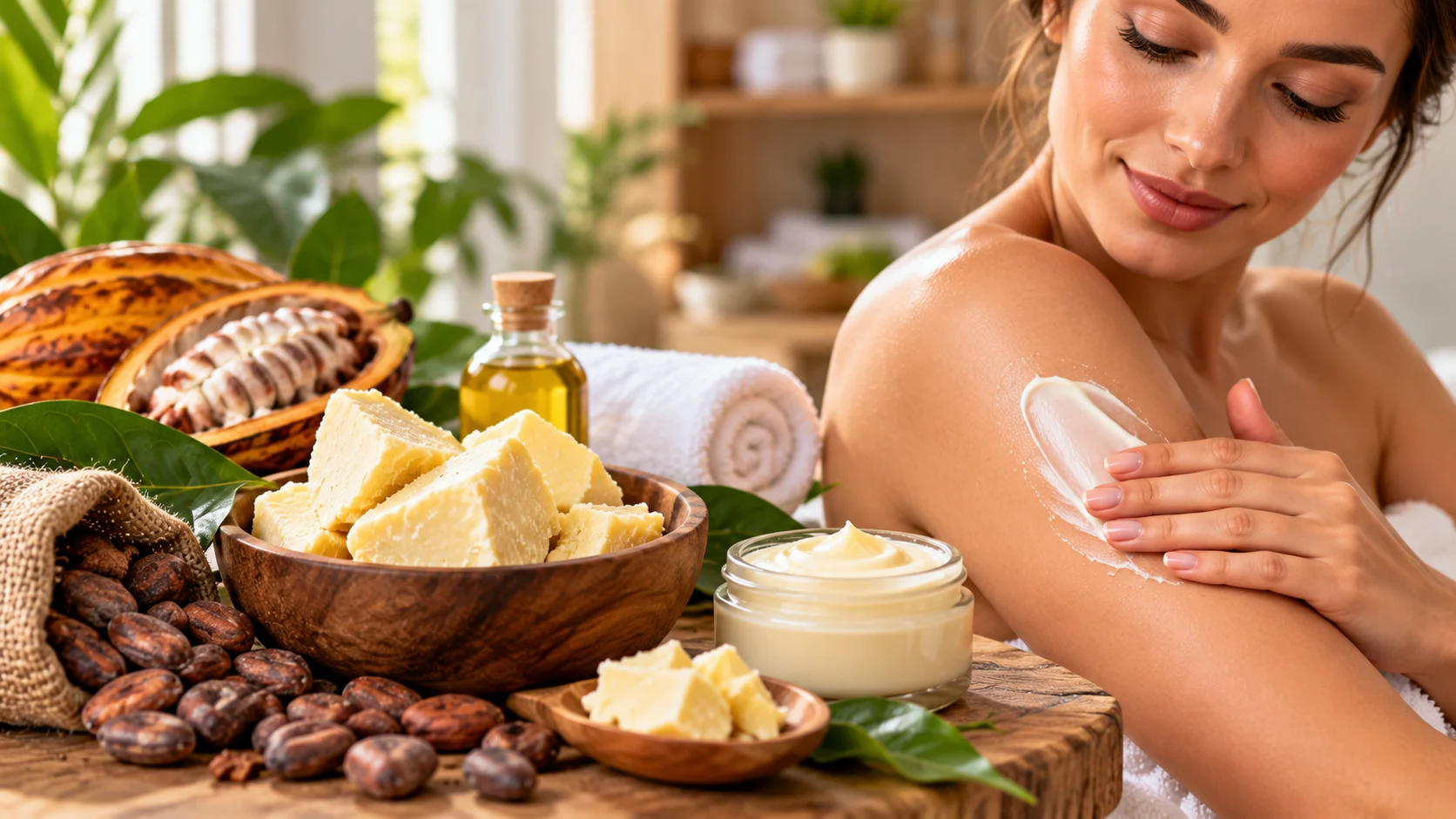
Cocoa butter has become a popular ingredient in skincare products because of its rich texture, moisturizing properties, and pleasant natural aroma. Extracted from cocoa beans, this plant-based fat appears in body lotions, creams, lip balms, and moisturizing treatments. Many people use cocoa butter to soften rough skin, support moisture retention, and improve everyday skin comfort.
Understanding cocoa butter benefits for skin can help you decide whether this ingredient belongs in your skincare routine. Although cocoa butter offers useful moisturizing properties, it is not a solution for every skin concern or suitable for every skin type. This guide explains its benefits, common uses, application methods, limitations, and possible side effects.
What Is Cocoa Butter?
Cocoa butter is a natural vegetable fat extracted from the beans of the cacao tree, scientifically known as Theobroma cacao. It is commonly used in chocolate production, cosmetics, and skincare formulations because of its rich composition and smooth consistency. In skincare, cocoa butter primarily functions as an emollient that helps soften and condition the skin.
At room temperature, cocoa butter usually has a firm texture that gradually melts when exposed to body warmth. This characteristic makes it convenient for use in moisturizing bars, body butters, and lip care products. Its natural fatty acids help create a protective layer over the skin, reducing moisture loss and improving surface softness.
Cocoa butter is available in refined and unrefined varieties, which differ in aroma, processing, and appearance. Unrefined cocoa butter generally retains more of its natural chocolate-like scent, while refined versions are often milder. Both types can provide moisturizing benefits, although the suitability of a finished product depends on its complete formulation.
Why Is Cocoa Butter Good for Your Skin?
One of the main cocoa butter benefits for skin is its ability to reduce moisture loss and improve the feeling of dryness. Its fatty acids help soften the outer skin surface and support a more comfortable texture. This makes cocoa butter particularly useful in moisturizing products intended for rough or dry areas.
Healthy skin depends on a functioning protective barrier that limits excessive water loss and helps defend against environmental irritants. Cocoa butter can support this barrier by forming an emollient layer over the skin. However, it does not replace the skin’s natural protective structures or directly treat underlying medical conditions that cause persistent dryness.
Another advantage is its compatibility with many everyday skincare formulations. Manufacturers often combine cocoa butter with glycerin, plant oils, and other moisturizing ingredients to create richer creams. These combinations can provide more comprehensive hydration than cocoa butter alone because different ingredients contribute to moisture retention in different ways.
Cocoa Butter Benefits for Dry Skin
Dry skin often develops when the outer skin layers lose moisture faster than they can retain it. This can create tightness, rough patches, flaking, and occasional discomfort. Cocoa butter helps improve surface softness by forming a protective coating that slows moisture evaporation and makes dry areas feel smoother.
Applying a cocoa butter moisturizer after bathing can be especially useful because the skin may still contain some surface moisture. Spreading a suitable product over slightly damp skin helps reduce subsequent moisture loss. This approach can be helpful for areas such as elbows, knees, hands, and legs that frequently become dry.
Although cocoa butter is a useful moisturizer, extremely dry or cracked skin may require additional ingredients or professional evaluation. Fragrance-free creams containing humectants and barrier-supporting ingredients can sometimes be more suitable for sensitive or damaged skin. Persistent itching, inflammation, or painful cracking should not be managed with cosmetic moisturizers alone.
How Cocoa Butter Supports the Skin Barrier
The skin barrier is the outer protective system that helps maintain moisture balance and reduce exposure to environmental irritants. When this barrier becomes compromised, skin may feel dry, sensitive, or uncomfortable. Cocoa butter contains fatty acids that function as emollients, helping improve the flexibility and smoothness of the skin surface.
A moisturizing product containing cocoa butter can create a thin protective layer that limits water loss. This is particularly useful during colder weather or in dry indoor environments where the skin may become dehydrated more easily. Consistent moisturizing can support everyday skin comfort when combined with gentle cleansing and appropriate skincare habits.
However, cocoa butter does not provide complete protection against sunlight, pollution, or harsh chemicals. A healthy skincare routine may also require sunscreen, mild cleansing products, and suitable protective measures. Understanding these limitations helps prevent unrealistic expectations about what a single moisturizing ingredient can accomplish.
Can Cocoa Butter Improve Skin Softness and Texture?
Cocoa butter is commonly included in body care products because it makes the skin feel softer and smoother. Its emollient properties help reduce the rough sensation associated with dryness. When applied regularly, cocoa butter may improve the appearance of dry, flaky areas by conditioning the outermost skin layers.
Rough skin can develop for several reasons, including low humidity, frequent washing, friction, and insufficient moisturizing. Cocoa butter may help with dryness-related texture changes, but it does not remove every cause of uneven skin. Conditions involving inflammation, persistent bumps, or significant scaling may require treatments beyond routine moisturization.
For everyday use, apply a small amount of cocoa butter cream to clean skin and spread it gently. Pay particular attention to areas that feel uncomfortable or dry. Consistent application is generally more useful than applying excessive quantities, which may leave a heavy or greasy feeling without providing additional benefits.
Cocoa Butter Benefits for Lips, Hands, and Feet
Cocoa butter appears in many lip balms because it helps soften the lips and reduce moisture loss. Lips can become dry from cold weather, wind, and repeated exposure to dry air. A moisturizing balm containing cocoa butter can provide a comfortable protective coating and improve the appearance of mild dryness.
Hands often experience frequent washing and contact with cleaning products, making them vulnerable to roughness and moisture loss. Cocoa butter hand creams can help condition the skin after washing. Fragrance-free formulations may be preferable for people whose hands become irritated easily, especially when the skin barrier is already compromised.
Feet can also develop dry areas because of pressure, friction, and daily movement. Applying cocoa butter-based moisturizer to clean feet may improve surface softness, particularly around the heels. However, painful fissures, significant scaling, or persistent symptoms should receive appropriate medical attention rather than relying exclusively on cosmetic care.
Is Cocoa Butter Good for the Face?
Cocoa butter can moisturize facial skin, but its rich consistency may not be suitable for everyone. People with dry skin sometimes appreciate heavier creams, particularly during colder months. However, facial skin can react differently from body skin, so a product that works well on the legs may not be ideal for the face.
Individuals with oily or acne-prone skin may find pure cocoa butter too heavy. Its ability to contribute to clogged pores varies with the formulation and individual skin response, so it should not automatically be classified as safe or harmful for every complexion. Lightweight, noncomedogenic moisturizers may be more comfortable for people who develop frequent breakouts.
If you want to try cocoa butter on your face, begin with a small amount of a suitable facial formulation. Observe whether it causes breakouts, irritation, or unwanted greasiness. Avoid applying unfamiliar products close to the eyes, and discontinue use if the skin develops an uncomfortable reaction.
Does Cocoa Butter Help With Stretch Marks?
Cocoa butter is frequently promoted as a treatment for stretch marks because of its moisturizing properties. Stretch marks develop when the skin changes rapidly and structural changes occur within deeper skin layers. Although cocoa butter can soften and moisturize the surface, research has not demonstrated that it reliably prevents or removes stretch marks.
Using a moisturizing cream may reduce dryness or itching associated with skin stretching. This can improve comfort, particularly during periods of normal body changes. However, changes in stretch mark appearance are influenced by several factors, including genetics, time, and the underlying structure of the skin.
It is important to separate moisturizing benefits from claims about removing existing marks. Cocoa butter does not rebuild deeper skin structures or guarantee visible changes in stretch marks. Anyone concerned about significant skin changes can speak with a dermatologist about evidence-based options and whether treatment is necessary.
Cocoa Butter for Uneven Skin Tone and Dark Spots
Some skincare products containing cocoa butter are marketed for uneven skin tone, discoloration, and dark spots. However, cocoa butter primarily acts as a moisturizing ingredient rather than a clinically established treatment for hyperpigmentation. It can improve the appearance of dry skin, but this should not be confused with directly reducing excess pigment.
Dark spots may develop because of sun exposure, previous inflammation, or other skin conditions. Managing these concerns often requires identifying the underlying cause and using appropriate skincare ingredients. Sunscreen is particularly important because ultraviolet exposure can worsen several forms of hyperpigmentation and make discoloration more persistent.
A cocoa butter moisturizer can still be useful as part of a broader skincare routine when additional hydration is needed. However, people seeking treatment for dark spots should not expect cocoa butter alone to produce substantial changes. A dermatologist can recommend appropriate options based on skin type and the cause of discoloration.
Cocoa Butter vs. Shea Butter for Skin
Cocoa butter and shea butter are popular plant-based ingredients used in moisturizing creams and body care products. Both contain fatty acids that help soften skin and reduce moisture loss. However, their textures, natural compositions, and sensory characteristics differ, which can influence how they feel during application.
Cocoa butter is typically firmer at room temperature and has a recognizable chocolate-like aroma when unrefined. Shea butter often feels softer and may spread differently depending on processing and formulation. Neither ingredient is universally better because individual preferences and skin responses vary considerably between different products.
People with dry body skin may enjoy the richness of either butter, while those who dislike heavy textures may prefer lighter formulations. The complete ingredient list matters more than comparing one plant butter with another in isolation. Choosing an appropriate moisturizer should depend on comfort, sensitivity, and how the product performs on your skin.
How to Use Cocoa Butter in Your Skincare Routine
The easiest way to use cocoa butter is through a commercially formulated moisturizer or body butter. These products are generally designed to spread easily and may include additional ingredients that support hydration. Apply the product to clean skin, following the manufacturer’s directions and avoiding areas that are irritated or visibly infected.
For body moisturizing, a small amount applied after bathing can help keep the skin feeling comfortable. Warm the product gently between your hands if it has a firm consistency, then distribute it over dry areas. There is usually no need to apply thick layers, particularly when a lighter application provides sufficient coverage.
Pure cocoa butter can also be used on suitable areas of intact skin, but it may feel heavier than a formulated lotion. Avoid overheating it or mixing it with unfamiliar ingredients without understanding their safety. Always consider your skin’s response and choose products that fit your individual needs rather than following complicated routines.
Possible Side Effects of Cocoa Butter on Skin
Although many people tolerate cocoa butter well, it can occasionally cause unwanted skin reactions. Redness, itching, or irritation may occur because of sensitivity to an ingredient in the product. Added fragrances, preservatives, or other components can sometimes be responsible rather than the cocoa butter itself.
People with acne-prone skin may notice that heavy cocoa butter formulations do not suit their facial skincare needs. Product buildup and an uncomfortable greasy feeling can also occur when excessive amounts are applied. Choosing a lighter moisturizer or limiting use to dry body areas may help avoid these problems.
Before using a new cocoa butter product extensively, test it on a small area of intact skin according to appropriate patch-testing guidance. Stop using the product if irritation develops. People with known allergies, persistent skin conditions, or concerns about product ingredients should consult a qualified healthcare professional when necessary.
How to Choose the Best Cocoa Butter Skincare Product
Choosing a cocoa butter skincare product begins with understanding your skin type and moisturizing needs. A thick body butter may suit very dry areas, while a lighter lotion may feel more comfortable for regular daytime use. Product texture, fragrance, and additional ingredients can influence whether a moisturizer works well for you.
Look for clearly labeled ingredients and products from manufacturers that provide appropriate usage information. People with sensitive skin may prefer fragrance-free formulas that avoid unnecessary botanical extracts or strong scents. Ingredients such as glycerin, ceramides, and other moisturizers can complement cocoa butter by supporting different aspects of skin hydration.
Packaging and storage conditions are also important because natural fats can change texture when exposed to heat. Follow the manufacturer’s storage recommendations and avoid using products that have developed unusual odors or signs of deterioration. Selecting a suitable formulation can make cocoa butter easier to incorporate into a consistent skincare routine.
Conclusion
Cocoa butter benefits for skin mainly involve moisturizing, softening, and improving the comfort of dry or rough areas. Its naturally occurring fatty acids help reduce moisture loss and support a smoother skin surface. These properties explain why cocoa butter remains a popular ingredient in body lotions, creams, lip balms, and other skincare products.
Although cocoa butter offers useful moisturizing benefits, it should not be considered a proven treatment for stretch marks, dark spots, or every skin condition. Its rich texture may also be unsuitable for certain individuals, particularly those who experience frequent facial breakouts. Choosing an appropriate formulation and observing individual skin responses can help reduce unwanted reactions.
A simple skincare routine that includes gentle cleansing, suitable moisturizing, and daily sun protection can support healthy skin. Cocoa butter may be a helpful part of this routine when used according to personal needs. Understanding its benefits and limitations makes it easier to enjoy this traditional skincare ingredient without expecting unrealistic results.
Frequently Asked Questions (FAQs)
What are the main benefits of cocoa butter for skin?
Cocoa butter helps soften dry skin, reduce moisture loss, and improve surface smoothness. It also supports everyday skin comfort by forming an emollient layer over the outer skin surface.
Can I apply cocoa butter to my face every day?
Some people with dry skin tolerate cocoa butter-based facial products well. However, heavy formulations may not suit oily or acne-prone skin, so start cautiously and monitor your skin’s response.
Does cocoa butter remove stretch marks?
No reliable evidence shows that cocoa butter can remove or prevent stretch marks. It may moisturize the skin and reduce dryness-related discomfort, but it does not directly repair the deeper structural changes responsible for stretch marks.
Is cocoa butter better than shea butter?
Neither ingredient is universally better. Both can moisturize and soften skin, but their textures and formulations differ. The best choice depends on your skin type, individual sensitivity, and preferred product consistency.
Can cocoa butter cause pimples or clogged pores?
Heavy cocoa butter formulations may contribute to breakouts in some acne-prone individuals, although reactions vary. If you develop clogged pores or discomfort, consider switching to a lightweight, noncomedogenic moisturizer.



[…] Cocoa Butter Benefits for Skin Explained […]