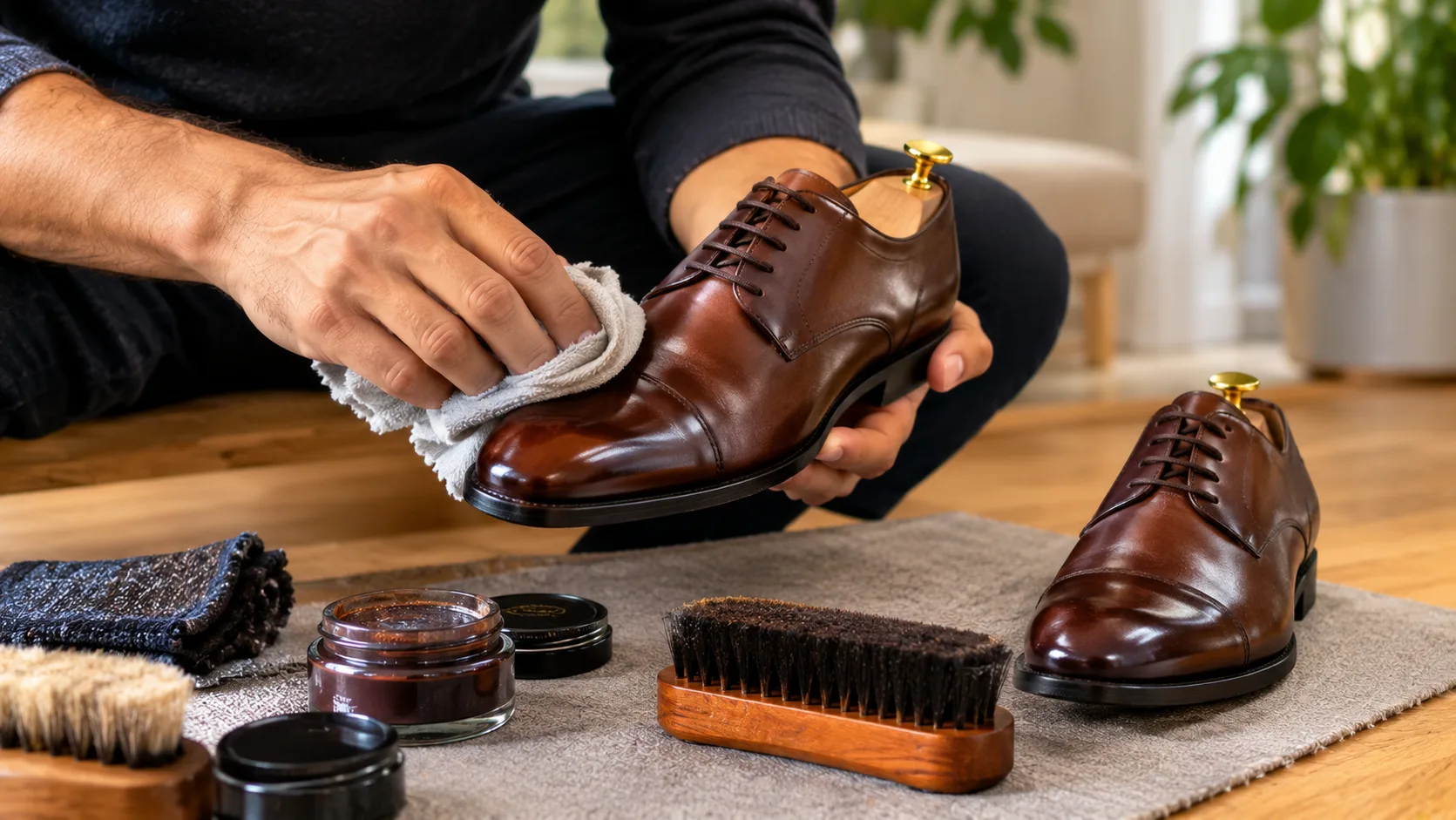
A well-polished pair of shoes can make a noticeable difference in your overall appearance. Whether you are preparing for a business meeting, attending a formal event, or maintaining your everyday footwear, clean and polished shoes help create a neat, put-together look. Learning how to polish shoes is a practical skill that can also support the long-term care of suitable leather footwear.
Shoe polishing does more than make leather look shiny. The right products can refresh its appearance, improve color consistency, and provide a protective surface layer against light moisture and everyday dirt. However, different materials require different treatments, and using the wrong polish can damage your favorite footwear.
Fortunately, polishing leather shoes at home is relatively simple when you understand the correct process. With a soft brush, suitable polish, and a little patience, you can restore a clean finish without professional equipment. This guide explains the tools, techniques, common mistakes, and maintenance habits that help keep your shoes looking their best.
Why Learning How to Polish Shoes Matters
Polishing shoes is an important part of maintaining the appearance of suitable leather footwear. Everyday activities expose shoes to dust, moisture, friction, and surface marks that gradually affect their finish. Regular cleaning and appropriate polishing can help maintain a neat appearance. It also makes routine footwear maintenance easier over time.
Leather shoes can become dull when surface finishes wear down or dirt accumulates. A suitable shoe polish can improve color uniformity and create a more consistent shine. Some products also leave a light wax coating that offers limited surface protection. However, polish does not replace proper cleaning, conditioning, or waterproofing when those treatments are necessary.
Learning to polish shoes at home can also help reduce unnecessary spending on routine maintenance. Basic supplies are usually sufficient for ordinary leather dress shoes and boots. With experience, the process becomes quicker and easier to manage. Consistent care helps maintain footwear appearance without requiring elaborate techniques or expensive accessories.
Understanding Different Types of Shoe Materials
Before polishing footwear, identify the material used in its construction. Smooth finished leather is commonly suitable for traditional cream or wax shoe polish. This material often appears on formal shoes, business footwear, and certain leather boots. Proper product selection helps maintain the original color and surface finish.
Suede and nubuck require a different approach because they have textured surfaces. Traditional wax polish can flatten their fibers, leave stains, and permanently alter their appearance. These materials generally need specialized brushes and cleaning products. Using products intended for smooth leather can create unwanted discoloration or texture changes.
Synthetic leather, patent leather, and coated materials also have different maintenance requirements. Patent leather usually benefits from gentle cleaning and products designed for glossy coated surfaces. Some synthetic shoes only require wiping with a soft cloth. Always check manufacturer recommendations before applying polish, especially to unfamiliar or delicate materials.
Essential Tools and Supplies for Polishing Shoes
A basic shoe polishing kit should include a soft cleaning brush, a polishing cloth, and a suitable leather polish. A horsehair brush is commonly used because its flexible bristles help distribute polish and buff the surface. Soft cotton cloths are useful for applying products carefully. Keeping these supplies clean prevents dirt from transferring onto footwear.
Leather conditioner can also be helpful when shoes need additional care before polishing. Cream polish provides color and a moderate shine, while wax polish creates a more pronounced surface finish. A shoe tree can help maintain the shoe’s shape during maintenance. These accessories are useful but not always essential for beginners.
Choose polish that matches the shoe color or use a neutral formula when appropriate. A mismatched colored polish can produce uneven results, particularly on lighter leather. Test unfamiliar products on a small, less visible area first. Product compatibility matters more than collecting a large number of polishing accessories.
How to Prepare Shoes Before Polishing
Proper preparation helps shoe polish spread evenly and produce a cleaner finish. Begin by placing the shoes on a protected work surface with sufficient lighting. Remove the shoelaces when practical so the polish does not stain them. Inserting shoe trees or clean paper can help the shoes retain their shape.
Use a soft brush to remove loose dust, dirt, and debris from the leather surface. Pay attention to seams, stitching, and the area where the upper meets the sole. If necessary, wipe the shoes with a slightly damp cloth. Allow the leather to dry naturally before applying polishing products.
Inspect the shoes for stains, scratches, cracks, or damaged finishes before continuing. Minor surface marks may improve with suitable cream polish, but deeper damage can require specialized treatment. Avoid using excessive water or harsh household cleaners. Preparing the surface carefully improves polishing results and reduces the chance of trapping dirt beneath the finish.
How to Polish Shoes Step by Step
Start with clean, dry smooth leather shoes and a polish suitable for their finish. Wrap a soft cloth around your fingers and collect a small amount of cream or wax polish. Apply it to the leather using gentle circular movements. Work across the shoe gradually, distributing a thin layer instead of leaving heavy deposits.
Pay particular attention to the toe, heel, and other visible areas that commonly experience surface wear. Avoid applying excessive product around seams and decorative stitching because buildup can be difficult to remove. Follow the polish manufacturer’s instructions for drying or setting time. Different formulas may require slightly different techniques.
Once the polish has set as directed, use a clean horsehair brush to buff the leather. Move the brush briskly but gently across the surface to develop an even shine. Finish with a soft cloth if additional buffing is needed. The result should look clean and consistent without sticky residue or visible polish buildup.
Choosing Between Cream Polish and Wax Polish
Cream polish is commonly used to refresh the color and appearance of smooth leather footwear. Many formulas contain pigments and conditioning ingredients that help improve the look of minor surface wear. Cream products generally produce a softer shine than concentrated wax polish. They are often suitable for routine maintenance.
Wax polish is particularly useful when a stronger shine is desired. It forms a surface coating that can be buffed to create a more reflective finish. Wax is commonly applied to relatively firm areas such as the toe and heel. Excessive application to flexible leather can contribute to cracking or visible buildup.
Some people use cream polish first and finish with a small amount of wax. This combination can improve color consistency while providing additional surface shine. However, it is important to use compatible products and avoid unnecessary layering. Choosing the right polish depends on leather type, desired appearance, and manufacturer guidance.
How to Polish Black Leather Shoes
Black leather shoes are commonly worn with formal clothing, office outfits, and professional uniforms. Their dark color can make dust, scuffs, and uneven finishing noticeable under bright lighting. Proper cleaning is therefore important before polishing. A suitable black shoe cream can help restore a more consistent appearance.
Begin by brushing away loose dirt and wiping the surface when necessary. Apply a small amount of black polish using a soft cloth, spreading it evenly over the finished leather. Avoid transferring pigment onto contrasting stitching, soles, or decorative materials. Allow the polish to set according to the product instructions.
Buff the shoes with a clean horsehair brush until the desired shine develops. For formal occasions, a small amount of wax polish can add extra gloss to the toe and heel. Keep flexible areas relatively free from heavy wax buildup. Regular light maintenance usually creates better results than applying excessive polish occasionally.
How to Polish Brown Leather Shoes
Brown leather shoes often feature color variations that contribute to their overall appearance. Unlike plain black footwear, brown shoes may have lighter highlights, darker edges, or a natural patina. Choosing the correct polish color is therefore especially important. An overly dark product can change the original finish.
For routine maintenance, select a cream polish that closely matches the existing color. Neutral products may be useful when preserving natural variation, although they can affect some finishes. Test a small area before treating the entire shoe. Pay particular attention to burnished toes and decorative color transitions.
Apply a thin, even layer and avoid concentrating pigment in one location. Once the product has set, buff the leather gently to develop a consistent sheen. Brown footwear often looks attractive with a natural satin finish rather than an extreme mirror shine. The ideal result depends on the shoe’s original style.
How to Shine Shoes Without Using Too Much Polish
A common misconception is that applying more polish automatically creates a brighter shine. In reality, excessive product can leave a cloudy, sticky, or uneven surface. Thin applications are generally easier to control and buff. Good results depend on preparation, product quality, and polishing technique.
Start with a clean shoe and apply only a small amount of polish at a time. Spread the product evenly instead of concentrating it on one section. Allow it to set as instructed before buffing with a suitable brush. Repeat only when additional polishing is genuinely needed.
A clean finishing cloth can help remove remaining surface haze and improve the overall appearance. Gentle, consistent movements are more useful than applying excessive pressure. Some shoes develop an attractive natural shine after brushing alone. Avoid unnecessary polishing when the leather already looks clean and well maintained.
How to Get a Mirror Shine on Leather Shoes
A mirror shine is a highly reflective finish commonly associated with formal dress shoes and ceremonial footwear. It is usually created through carefully layered wax polish rather than cream polish alone. The technique works best on firm toe caps and heel areas. Flexible sections are generally unsuitable for heavy wax layering.
Begin with clean, smooth leather and a suitable hard wax shoe polish. Apply a very thin layer to the toe using a soft cotton cloth. Allow it to set according to the manufacturer’s directions before gently buffing. Repeat with additional thin layers only when needed to develop the reflective surface.
Some traditional polishing methods use a tiny amount of water to help smooth wax layers. However, excessive moisture or pressure can spoil the finish and affect certain leathers. Work patiently and avoid forcing the process. A mirror shine is optional, and a regular polished finish is appropriate for most everyday footwear.
How to Polish Leather Boots Properly
Leather boots often experience more exposure to dust, mud, moisture, and outdoor conditions than formal shoes. Their care requirements depend on the leather type and intended use. Smooth leather boots may benefit from suitable conditioning and polishing products. Oiled, waxed, or specially treated leather may require different maintenance methods.
Before applying polish, remove surface dirt with a soft brush and clean stubborn marks using an appropriate product. Allow damp boots to dry naturally, away from direct heat. Inspect seams, stitching, and creased areas for signs of wear. Avoid trapping moisture beneath heavy coatings.
Apply a suitable leather cream or wax in thin layers when recommended for the boot’s finish. Use a brush to buff smooth leather and remove excess product. Outdoor boots may also require specialized protective treatments suited to their construction. Always follow manufacturer instructions, particularly when maintaining waterproof or breathable footwear.
Common Shoe Polishing Mistakes to Avoid
Applying polish to dirty shoes is one of the most common footwear maintenance mistakes. Dust and debris can become trapped beneath the product, leaving an uneven surface. Rubbing contaminated leather can also create additional marks. Cleaning should always come before polishing.
Another frequent mistake involves using too much product or choosing the wrong formula. Excessive wax can accumulate in creases and make the finish appear cloudy. Colored polish may also darken or stain lighter leather if it does not match properly. Testing unfamiliar products reduces the risk of unexpected changes.
Using direct heat to speed up drying can damage leather and surrounding components. Hair dryers, radiators, and strong sunlight may cause unwanted drying or finish changes. Aggressive scrubbing and harsh cleaning chemicals can also affect the leather surface. Gentle techniques and appropriate products are usually more reliable.
How Often Should You Polish Your Shoes?
The ideal polishing frequency depends on how often shoes are worn and the conditions they encounter. Footwear used daily may require more frequent cleaning and occasional polishing than shoes reserved for formal occasions. There is no universal schedule suitable for every pair. Regular inspection can help determine when maintenance is necessary.
Light brushing after wear may be sufficient when shoes are not particularly dirty. Cream or wax polish can be applied when the finish begins to look dull or visibly worn. Frequent heavy polishing is generally unnecessary. Overusing products may create buildup without improving the leather’s condition.
Climate and storage conditions also influence maintenance needs. Shoes exposed to rain, dust, or frequent outdoor use may require more attention. Rotating footwear can allow shoes to dry between uses. A simple routine based on actual condition is often more effective than following a rigid polishing calendar.
Leather Conditioning vs. Shoe Polishing
Leather conditioning and shoe polishing serve related but different purposes. Conditioning products are designed to help maintain suitable leather’s flexibility and surface feel. Shoe polish primarily improves appearance through color, shine, or a protective surface coating. Some cream polishes include conditioning ingredients, but formulations vary.
Leather that feels unusually dry or stiff may benefit from an appropriate conditioner before polishing. However, overconditioning can also affect certain finishes or leave unwanted residue. Use products recommended for the specific leather type. Test any unfamiliar treatment before applying it widely.
Polishing cannot repair deeply cracked leather or reverse serious structural damage. It can improve minor visual imperfections but should not be treated as a substitute for repairs. A professional cobbler may be needed when the finish is damaged or the leather requires restoration. Understanding these differences helps avoid unrealistic expectations.
How to Remove Old Shoe Polish Buildup
Over time, repeated polishing can leave visible residue in seams, creases, and textured areas. This buildup may create a cloudy finish or make leather look uneven. Regular brushing can remove loose surface material before it accumulates. More stubborn deposits may require specialized cleaning.
Begin with a soft brush and a clean cloth to remove loose residue. If necessary, use a leather cleaner specifically recommended for the shoe’s finish. Apply the product carefully and follow its instructions. Avoid strong household solvents because they can remove dyes or damage protective coatings.
After cleaning, allow the shoes to dry naturally and inspect the surface before applying additional products. A light conditioner may be appropriate for some leather types. Finish with a thin layer of suitable polish only if needed. Severe buildup or delicate finishes may require professional leather care.
How to Store Polished Shoes Correctly
Proper storage helps maintain the appearance of polished footwear between uses. Keep shoes in a clean, dry, and well-ventilated area away from excessive heat. Direct sunlight can contribute to fading or damage certain finishes over time. Avoid storing damp shoes in enclosed spaces.
Shoe trees can help suitable leather footwear maintain its shape and manage creasing after wear. Cedar shoe trees may also absorb some moisture, although they do not replace proper drying. When shoe trees are unavailable, clean paper can provide temporary shape support. Avoid tightly stuffing shoes with materials that distort their construction.
For longer storage periods, place clean and dry shoes in breathable fabric bags or suitable boxes. Keep them away from heavy objects that could damage the uppers. Inspect footwear occasionally when storing it for extended periods. Good storage habits complement regular polishing and cleaning.
Matching Polished Shoes With Different Outfits
Polished shoes can complement many clothing styles, including formal, business, and smart-casual outfits. Black leather dress shoes are commonly paired with suits and professional clothing. Brown leather footwear can work with tailored trousers, chinos, and certain relaxed outfits. The best combination depends on the dress code and personal preference.
The level of shine can also influence the appearance of an outfit. Highly reflective footwear is often associated with formal occasions, while softer leather finishes may suit everyday dressing. Neither option is automatically better. Consistency between footwear style and the overall outfit creates a more intentional appearance.
Footwear maintenance is not limited to special occasions or expensive shoes. Clean, appropriately cared-for footwear can improve the presentation of simple everyday outfits. Coordinating shoes with belts or accessories is optional rather than a strict requirement. Comfort, practicality, and personal style should remain important considerations.
Quick Shoe Polishing Tips for Beginners
If you are learning how to polish shoes for the first time, begin with a pair of smooth leather shoes that has a straightforward finish. Choose a compatible cream polish and a soft brush. Practice applying very small amounts of product. This makes it easier to understand how the leather responds.
Work in a comfortable, well-lit space and protect nearby surfaces from colored polish. Keep separate application cloths for significantly different polish colors to reduce accidental staining. Clean brushes regularly when product residue becomes noticeable. Simple organization helps make future polishing sessions more efficient.
Avoid trying advanced mirror-shine techniques before becoming comfortable with basic polishing. A clean, evenly buffed finish is already suitable for many situations. Focus on careful preparation, light application, and gentle brushing. With practice, maintaining leather footwear becomes a manageable part of regular clothing care.
Conclusion
Learning how to polish shoes is a useful skill for maintaining the appearance of smooth leather footwear. The process begins with identifying the material, cleaning the surface, and selecting suitable products. Thin polish applications followed by gentle buffing can create a neat, consistent finish without complicated equipment.
Different footwear materials and finishes require different approaches. Smooth leather often responds well to cream or wax polish, while suede, nubuck, and coated materials need specialized care. Avoiding excessive product, harsh cleaning techniques, and direct heat can help protect footwear from unnecessary damage.
A consistent shoe care routine can keep suitable leather shoes looking clean and presentable for everyday activities and special occasions. Regular brushing, occasional polishing, and careful storage are practical habits worth developing. With the right techniques, shoe maintenance can remain simple, effective, and easy to manage.
Frequently Asked Questions
How Do You Polish Shoes at Home?
Clean smooth leather shoes with a soft brush, apply a thin layer of suitable shoe polish, and allow it to set as directed. Finish by buffing the surface with a horsehair brush or soft cloth.
Can You Polish Shoes Without Shoe Polish?
You can improve the appearance of some smooth leather shoes by cleaning and buffing them with a soft cloth. However, this will not necessarily restore color or create the same finish as suitable shoe polish.
How Long Should Shoe Polish Dry Before Buffing?
Drying or setting time depends on the polish formula and manufacturer instructions. Many products require only a short period before buffing. Applying thin layers helps prevent buildup and supports a more consistent finish.
Is Shoe Polish Good for Leather Shoes?
Suitable polish can improve color consistency, shine, and limited surface protection on compatible smooth leather. However, improper products or excessive application may damage certain finishes. Always choose polish recommended for the footwear material.
How Often Should You Polish Leather Shoes?
Polish leather shoes when their appearance becomes dull or visibly worn rather than following a strict schedule. Frequently worn shoes may need more attention, while occasional-use footwear often requires only cleaning and light maintenance.




[…] How To Polish Shoes: A Simple Style Guide […]