Why Heatless Curl Methods Are Worth Trying
Heatless curl methods are a simple way to style your hair without relying on curling irons, flat irons, or other heated tools. These techniques use braids, rollers, soft fabric, and gentle twisting to shape the hair naturally. Whether you prefer loose waves or more defined curls, heatless styling offers different options that can fit comfortably into your everyday hair care routine.
Repeated exposure to high temperatures can affect the protective outer layer of hair and contribute to dryness, breakage, and split ends. Heatless curling reduces this particular source of stress by allowing hair to take shape without intense heat. However, gentle handling remains important because tightly wrapped hair and excessive tension can still cause unnecessary damage.
One of the biggest advantages of heatless curls is that many techniques require only simple accessories already available at home. Socks, soft headbands, fabric belts, and foam rollers can all help shape different curl patterns. Understanding how these methods work makes it easier to choose an approach that matches your hair length, natural texture, and preferred styling results.
How to Prepare Your Hair for Heatless Curls
Preparing your hair properly can make heatless curling easier and help the finished style hold its shape. Begin with clean, gently detangled hair that is dry or only slightly damp, depending on the technique. Hair that is soaking wet may take much longer to dry, especially when wrapped tightly around fabric or rollers for several hours.
A lightweight styling mousse or suitable leave-in product may help improve manageability and support curl definition. Apply products according to their instructions, avoiding excessive amounts that leave the strands sticky or weighed down. The most suitable formula depends on your hair’s natural texture and how easily it holds a temporary style without additional support.
Before wrapping or braiding, divide your hair into manageable sections and remove any remaining tangles carefully. Use soft accessories that do not pull against the scalp or place excessive pressure on individual strands. Taking a few extra minutes during preparation can reduce unnecessary friction while making the curling process more comfortable and predictable.
Try the Bathrobe Belt Method for Loose Heatless Curls
The bathrobe belt curling method is a popular heat-free styling technique that uses a soft fabric belt to shape the hair. Begin by placing a clean, comfortable robe belt across the top of your head. Divide your hair into two sections and gradually wrap strands around the fabric, adding additional hair as you move toward the ends.
Once each side is wrapped, secure the ends gently with soft hair ties or scrunchies. Avoid pulling the fabric tightly against the scalp because excessive tension can make the style uncomfortable. The amount of time needed depends on your hair’s texture, moisture level, and ability to maintain a temporary curl pattern after the belt is removed.
When the hair has fully dried and the shape has developed, carefully unwrap each section without pulling or brushing aggressively. Use your fingers to separate the curls if you prefer a softer appearance. The bathrobe belt method often results in loose, flowing curls, although the final pattern varies according to wrapping technique and individual hair characteristics.
Use a Satin Curling Rod for Gentle Styling
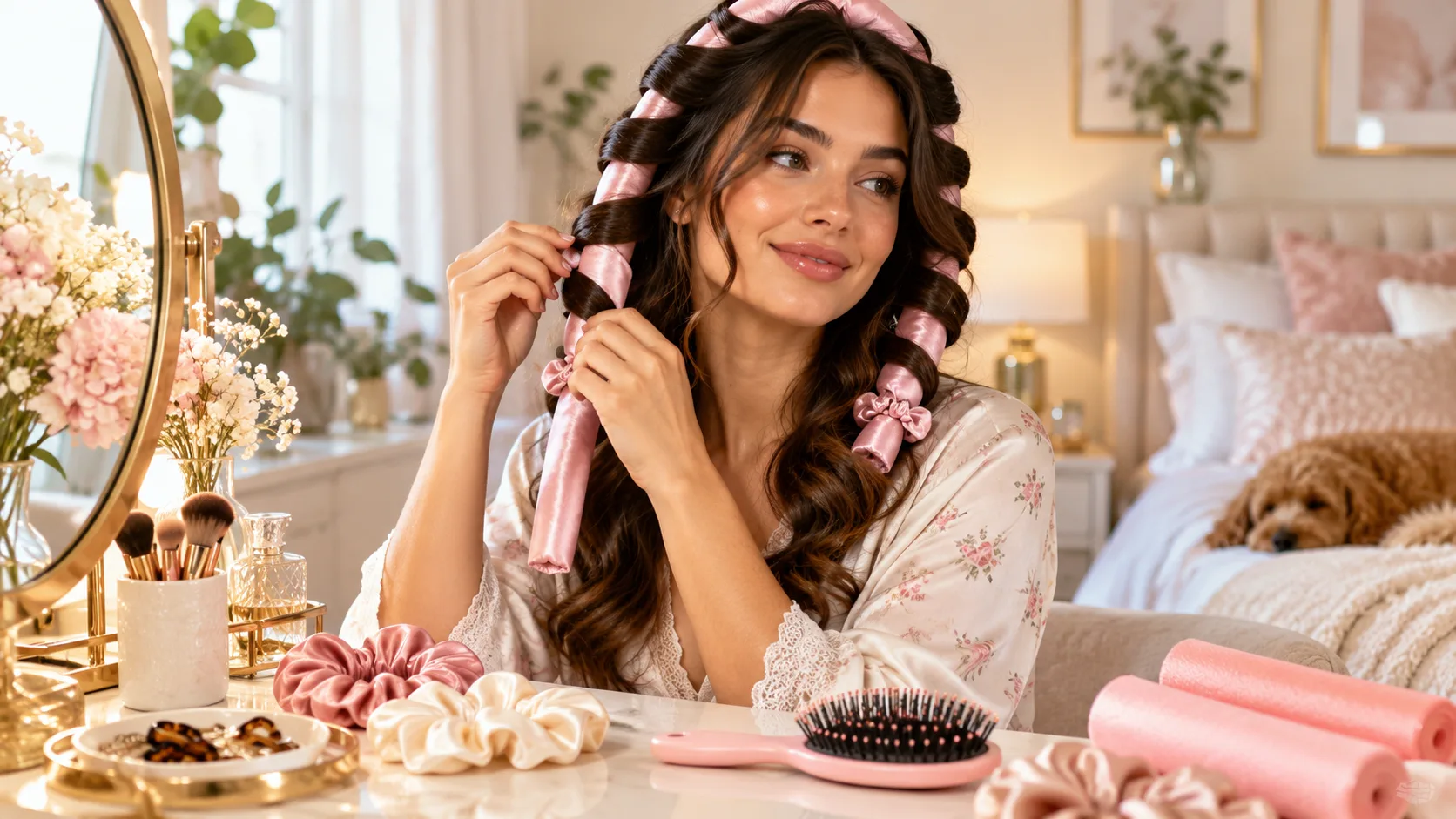
A satin heatless curling rod is a soft styling accessory designed to help shape hair without applying direct heat. It typically consists of a flexible padded rod covered in smooth fabric. This design allows sections of hair to wrap around the accessory while limiting some of the friction associated with rougher materials during styling.
To use a satin curling rod, position it comfortably across your head and divide your hair into sections. Wrap the strands around the rod, working gradually toward the ends and securing them with gentle accessories. Avoid creating excessive tension, particularly near the hairline, and adjust the position if the rod feels uncomfortable against your scalp.
Allow the hair to dry completely before carefully releasing the wrapped sections. Depending on your hair type and wrapping pattern, the technique may result in loose curls or more defined waves. Satin accessories are especially convenient for people who prefer smooth fabric, although the material alone cannot prevent every form of mechanical hair damage.
Make Heatless Curls With Socks at Home
Sock curls are an affordable heatless styling method that uses clean, soft socks instead of specialized curling accessories. The technique works by wrapping sections of hair around the fabric and securing them gently. Different sock lengths and thicknesses can influence the wrapping process, making this approach flexible for experimenting with a variety of temporary curl patterns.
Start with detangled hair that is dry or slightly damp, then divide it into several manageable sections. Place a clean sock near one section and wrap the hair around it from the upper lengths toward the ends. Secure the wrapped hair without pulling tightly, and repeat the process until all the desired sections are arranged.
Leave the wrapped sections in place until the hair is fully dry and has had enough time to hold its new shape. Remove the socks carefully rather than pulling them through the strands. Smaller sections may develop more defined bends, while larger sections often produce softer waves, although results depend on individual hair texture.
Create Natural Waves With Overnight Braids
Braiding is one of the easiest heatless curl methods because it requires minimal equipment and works with many hair lengths. Braids help form a temporary wave pattern as the hair remains in a particular arrangement. Depending on the braid style and section size, the finished appearance may range from subtle movement to more noticeable waves.
For loose waves, divide detangled hair into two or more comfortable sections and form relaxed braids. Smaller braids generally create more frequent bends, while larger braids tend to produce broader waves. Secure the ends with soft hair ties, avoiding tight tension around the scalp and hairline that could cause discomfort or unnecessary breakage.
Braids can be left in place for several hours or overnight when they are comfortable and the hair is appropriately dry. Avoid sleeping with tightly secured, very wet braids because prolonged dampness and tension may irritate the scalp. Once released, separate the waves gently with your fingers to maintain their temporary shape.
Try Twisted Buns for Soft Waves and Texture
Twisted buns are a convenient heatless styling technique for people who want gentle waves without using multiple curling accessories. The method involves twisting sections of hair and arranging them into loose buns. It can work particularly well for hair long enough to twist and secure comfortably without excessive pulling near the roots.
Begin by dividing your hair into two or more sections, depending on the pattern you want to achieve. Twist each section gently and arrange it into a loose bun, securing it with a soft scrunchie or suitable clip. Avoid twisting the strands too tightly because excessive tension can contribute to discomfort and unnecessary mechanical stress.
Allow the twisted sections to remain in place until the hair is fully dry and the desired shape has had time to develop. Release the buns carefully and separate the resulting waves using your fingers. This method often creates relaxed texture rather than uniform curls, making it suitable for casual hairstyles and everyday styling.
Use Foam Rollers and Flexi Rods for Defined Curls
Foam rollers are useful heatless curling tools because they allow hair to take shape around a soft, rounded surface. They come in different sizes, making them suitable for creating a range of curl patterns. Larger rollers generally encourage broader curls, while smaller rollers can form tighter shapes when the hair responds well to the technique.
To use foam rollers, divide your hair into manageable sections and position each roller near the ends. Wrap the section around the roller, moving toward the roots while maintaining gentle tension. Secure it according to the manufacturer’s instructions, making sure the roller does not pull uncomfortably against your scalp or surrounding strands.
Flexi rods work similarly but use bendable materials that hold wrapped sections without requiring traditional roller clips. Both methods can be useful for experimenting with curl definition while avoiding direct styling heat. Remove the accessories after the hair is completely dry, and avoid pulling through tangles or forcing rollers out of tightly wrapped sections.
Learn the Classic Pin Curl Method
Pin curls are a traditional heatless styling technique that uses small sections of hair arranged into circular shapes. The method can help form defined curls without relying on a curling iron. It requires patience and careful sectioning, but it allows you to experiment with curl size and placement using relatively simple accessories.
Begin with smooth, detangled hair and select a small section that can be rolled comfortably. Wrap the section around your fingers to form a loose circular curl, then position it gently against your head. Secure the shape using an appropriate flat clip, making sure the accessory does not scratch the scalp or pull on the hair.
Repeat the process with additional sections, allowing the hair to set until it is fully dry. Carefully remove the clips and release each curl without tugging or disrupting neighboring strands. Pin curls may produce defined, structured shapes, although their final appearance depends on section size, natural hair texture, and how the curls are separated afterward.
Try the Headband Method for Easy Heatless Waves
The headband curling method uses a soft, comfortable headband to hold sections of hair in a wrapped position. It is a convenient option for people who prefer simple styling accessories rather than individual rollers. The technique can produce gentle waves when the hair responds well to being arranged around the fabric.
Place a soft headband comfortably around your head without creating pressure or pulling against the hairline. Take small sections of hair and loop them around the band, gradually adding nearby strands as you continue. Work around the head until the desired hair sections are wrapped, then adjust any areas that feel too tight or uncomfortable.
Once the hair has fully dried, release the sections carefully and remove the headband without snagging individual strands. The resulting style may have soft bends or more noticeable waves depending on the wrapping technique. This method is especially useful for experimenting with heatless styling, although very short layers may require additional gentle securing.
Choose Heatless Curl Methods Based on Your Hair Type
Choosing the right heatless curl method depends on your hair length, natural texture, and how easily it holds a temporary shape. Shorter hair may work well with small foam rollers or pin curls, while longer hair can accommodate fabric wrapping and braids. Experimenting with different section sizes helps you understand which approaches feel practical and comfortable.
Fine hair may respond well to lightweight styling products and smaller sections, particularly when heavier creams make it feel weighed down. Dense or thick hair may require additional drying time because wrapped sections can retain moisture. Regardless of hair type, avoid tightening accessories simply to achieve stronger curls, as excessive tension can contribute to breakage.
Naturally curly or wavy hair may already have a pattern that can be enhanced through gentle twisting or braiding. Straighter hair sometimes needs more setting time or appropriate styling support to maintain temporary curls. No single method guarantees identical results for everyone, so adjust your routine according to comfort, hair condition, and personal styling preferences.
Make Heatless Curls Last Longer and Avoid Common Mistakes
One of the most important factors in making heatless curls last longer is allowing the hair to dry completely before removing accessories. Hair that remains damp may lose its temporary shape soon after being released. Choosing suitable styling products and avoiding excessive handling can also help maintain the pattern, although results vary with humidity and hair texture.
Avoid brushing newly formed curls aggressively because this can separate the strands and reduce definition. If you prefer softer waves, gently loosen sections with your fingers rather than repeatedly pulling through the hair. A small amount of suitable finishing product may help maintain the style, but excessive application can leave unwanted residue or make hair difficult to manage.
Common mistakes include wrapping sections too tightly, using uncomfortable accessories, and leaving thick sections excessively damp for long periods. These habits can reduce comfort and may contribute to unnecessary stress on the strands or scalp. If a styling method causes pain, pulling, or persistent tangling, loosen it or choose a gentler technique that better suits your hair.
Conclusion
Heatless curl methods are a practical way to explore different hairstyles without exposing your hair to the high temperatures used by traditional styling tools. Techniques such as bathrobe belt curls, sock curls, braids, foam rollers, and pin curls allow you to experiment with various patterns. Each approach offers different results depending on your natural hair characteristics.
Preparing your hair properly and using comfortable accessories are important for successful heatless styling. Gentle detangling, appropriate moisture levels, and careful sectioning can make these techniques easier to manage. Avoid pulling hair tightly or relying on excessive styling products, because protecting the strands from unnecessary tension remains important even when heat is not involved.
The best heatless curling method is the one that feels comfortable, fits your routine, and achieves a style you enjoy. You may need to experiment with wrapping techniques and setting times before finding a preferred approach. With patience and gentle hair care habits, heatless curls can become a convenient part of your everyday styling routine.
Frequently Asked Questions (FAQs)
What is the best heatless curl method for beginners?
Loose braids, sock curls, and bathrobe belt curls are simple options for beginners. They require minimal equipment and allow you to experiment with different wave patterns without using heated styling tools.
How long should you leave heatless curls in your hair?
The setting time depends on your hair’s texture, moisture level, and the method used. Several hours or overnight may work, provided the style remains comfortable and the hair dries completely.
Do heatless curls work on straight hair?
Yes, heatless curling methods can temporarily shape naturally straight hair, although the results and staying power vary. Suitable section sizes, gentle styling products, and adequate setting time may help support the finished pattern.
Is it better to do heatless curls on wet or dry hair?
Dry or slightly damp hair is generally easier to manage for many heatless curling techniques. Avoid wrapping soaking-wet hair tightly, especially overnight, because it may remain damp for an extended period.
Can heatless curling damage your hair?
Heatless curling avoids direct heat exposure, but overly tight wrapping, rough accessories, and excessive pulling can still cause breakage. Gentle techniques and comfortable styling materials help reduce unnecessary mechanical stress.


[…] Heatless Curl Methods You Need to Try […]